DESIGN 121 / DP1 / WEEK 4
Week 4 Teach One
This week helped me understand that ideas are only valuable once they start becoming real. It was less about finding the perfect idea right away, and more about generating, testing, building, and seeing what actually has enough tension to move forward.
01 / WEEK OVERVIEW
From opportunity to concept
Week 4 felt like the moment where our team had to stop living in the abstract. Last week, we were focused on insights and opportunity areas. This week pushed us to activate those opportunities by turning them into actual ideas, rough concepts, and low-fidelity prototypes.
What stood out to me was that ideation is not just about being creative. It is also about staying disciplined enough to keep ideas connected to a real user, a real tension, and a real behavior.
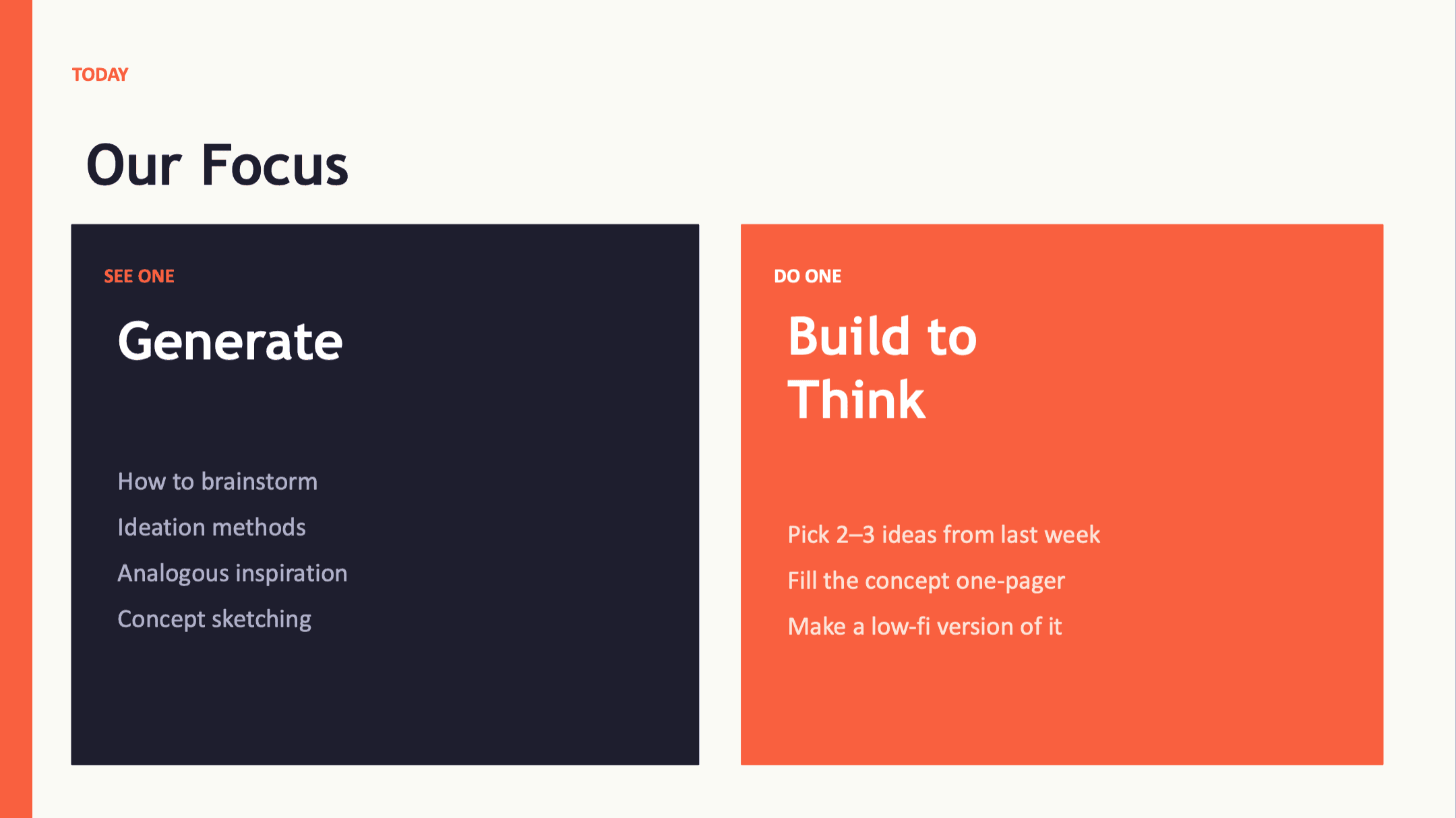
This slide captured the biggest shift for me: ideas get stronger when you build something rough enough to react to.
02 / WHAT I LEARNED
The goal is not one perfect idea
One of the biggest lessons from this week was that the goal of ideation is not to immediately land on the best idea. The goal is to create enough ideas that you can start seeing patterns, surprises, and directions worth developing.
That changed how I thought about our Forager work. I realized I had been trying to make ideas feel polished too early, when the better move was to get more ideas out first and then decide which ones had the strongest connection to our user.
It reminded me that judgment has a time and place. If you judge too early, you shrink the possibilities before they even have a chance to become interesting.
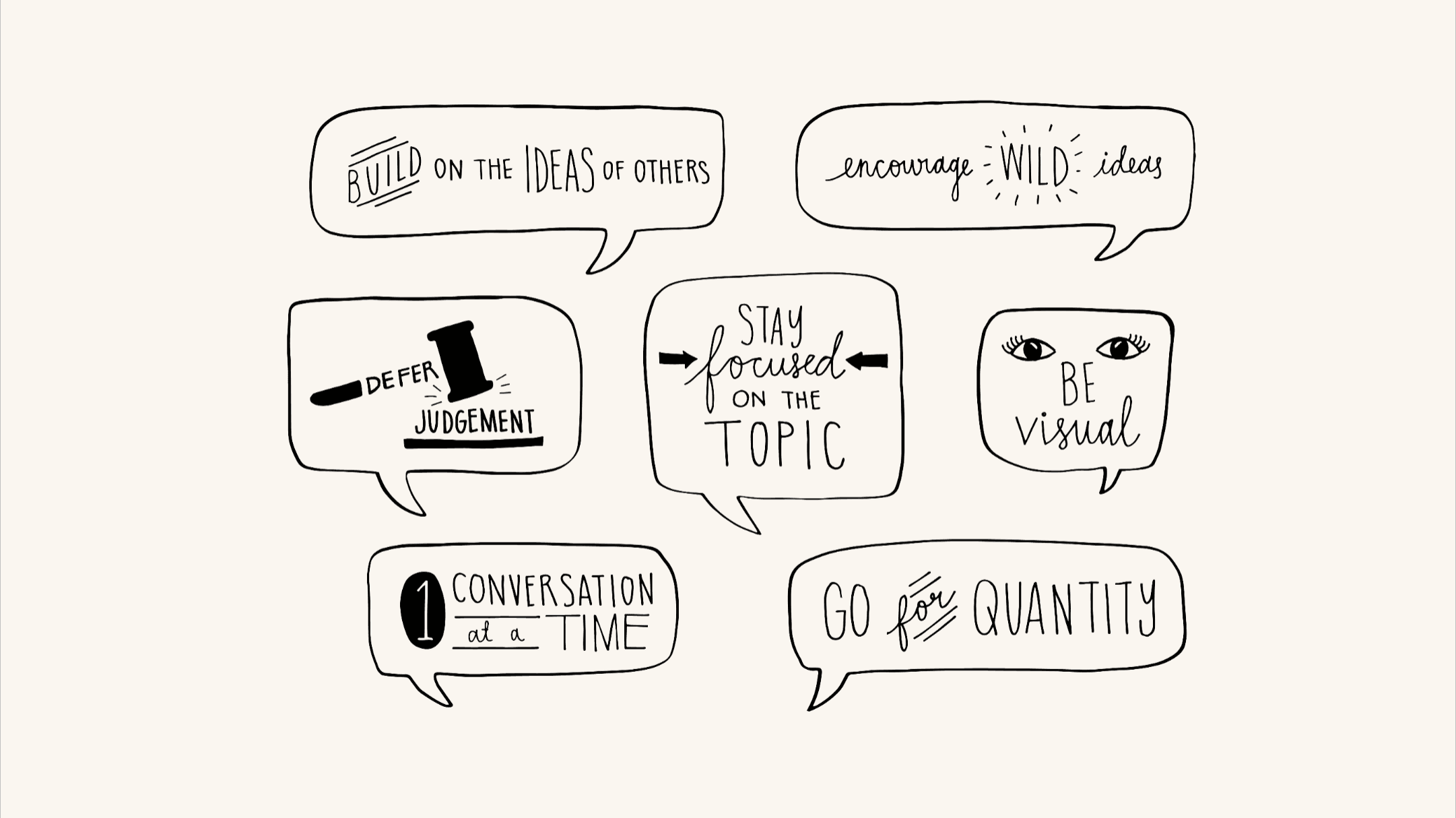
These ideation reminders were useful because they made the process feel more open: build on others, defer judgment, stay focused, be visual, and go for quantity.
03 / WHAT CHANGED FOR ME
Build first, think sharper after
The idea of “build to think” really clicked for me. Before this week, I thought of prototyping as something you do after the idea is mostly figured out. Now I see it more as part of figuring the idea out.
A rough prototype gives you something to react to. Once something is physical, visual, or acted out, you can immediately see what feels off, what feels confusing, and what feels promising.
For me, that was a big design lesson: sometimes you do not think your way into clarity — you make your way into clarity.
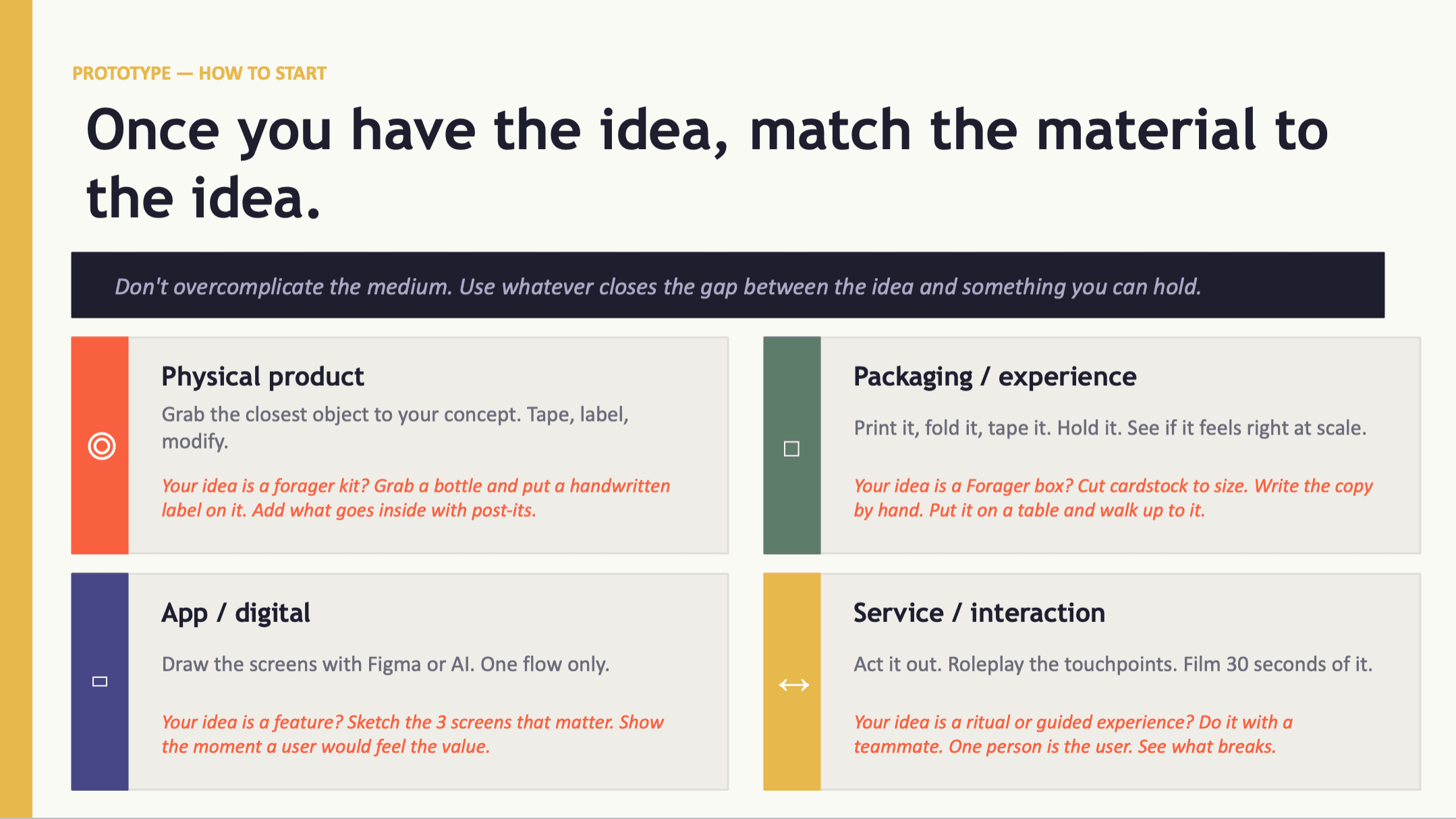
This framework helped me think about matching the prototype material to the idea: physical product, packaging, app/digital, or service interaction.
04 / HOW IT SHOWED UP IN OUR TEAM WORK
Forager as familiar, not foreign
In our team work, we started moving toward a clearer concept around Forager Daily Nourishment. The idea was to make plant-based nutrition feel familiar, trustworthy, and routine-based instead of overly new or intimidating.
Our direction was inspired by products like Ensure, but reimagined through Forager’s values: simple ingredients, wellness, recovery, and daily nourishment. Instead of leading with “vegan” or “alternative,” the concept focused on making the product feel comforting, clean, and easy to understand.
What I liked about this direction was that it came directly from our user tension. For older or more traditional users, the barrier was not just taste. It was trust. The design opportunity became less about convincing someone to change and more about making the new thing feel like something they already understand.
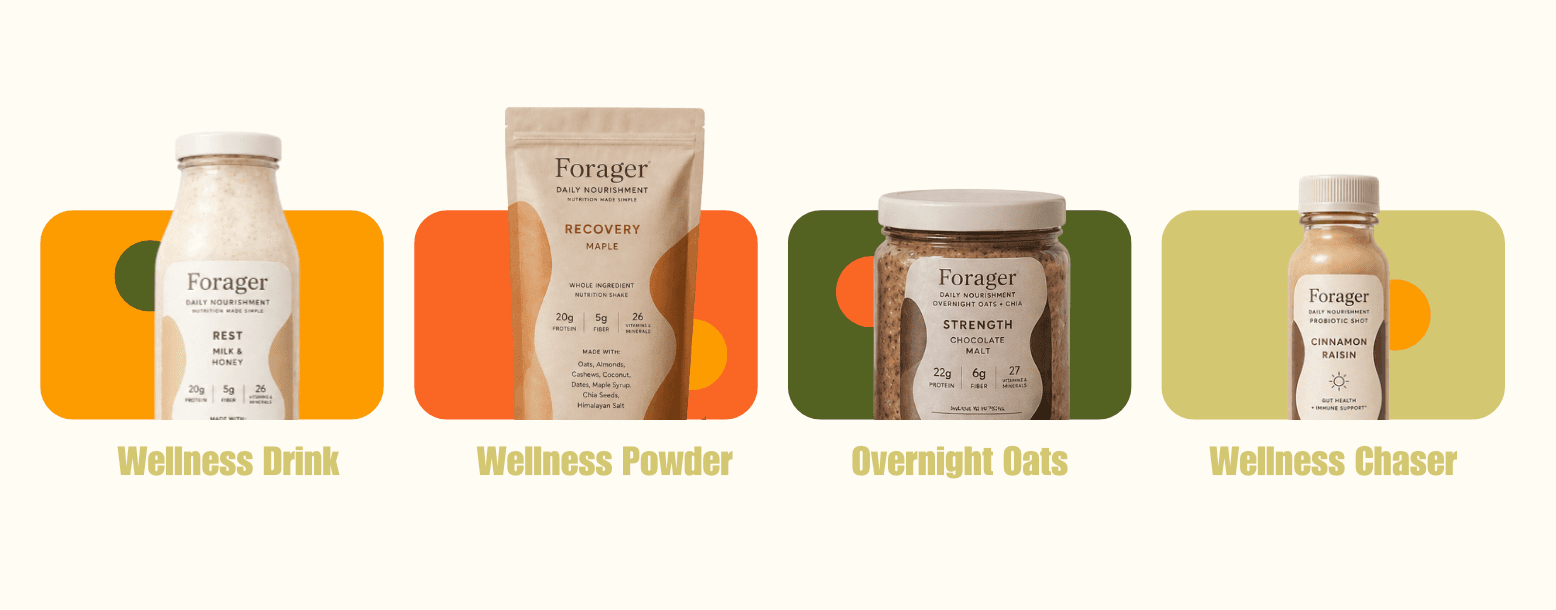
Our team explored a Forager Daily Nourishment line with products like wellness drinks, powders, overnight oats, and probiotic shots.
05 / KEY THINGS I’M TAKING FORWARD
What I want to remember
First, I want to remember that strong ideas usually come from volume. You need enough ideas on the table before you can recognize which ones are actually worth building on.
Second, I want to keep using low-fidelity prototypes earlier. A sketch, mockup, label, or quick roleplay can reveal more than a long conversation about the idea.
Third, I want to keep checking whether an idea connects back to the user tension. If the idea does not address the tension, then it might be interesting, but it is probably not the right idea.
06 / MY TAKEAWAY
Teach one in a sentence
What I’m taking from Week 4 is that design ideas become stronger when you stop protecting them in your head and start making them real enough to question, test, and improve.