DESIGN 121 / DP1 / WEEK 5
Week 5 Teach One
This week was about turning our research, insights, and early ideas into a final product story. For our Forager project, that became Forager Daily Nourishment: a product line designed to make plant-based nutrition feel familiar, trustworthy, and easy to fold into daily life.
01 / WEEK OVERVIEW
From concept to final story
Week 5 felt like the moment where everything had to come together. In earlier weeks, we were focused on research, synthesis, and rough ideas. This week was about turning that work into a clear presentation and a product direction that actually made sense.
The biggest shift for me was realizing that a final concept is not just about showing a cool product. It is about showing why that product exists, who it is for, what tension it responds to, and why it feels like a believable next step.
02 / FINAL DIRECTION
Forager Daily Nourishment
Our final direction was Forager Daily Nourishment, a wellness-focused product line built around simple ingredients, familiar flavors, and daily routines. The goal was to make non-dairy feel less like a risky alternative and more like something people could already understand.
We framed the project around the question: how might we make non-dairy feel as trustworthy and familiar as the products “The Senior” has always relied on? That question shaped the whole product line and helped us stay grounded in trust, routine, and familiarity.
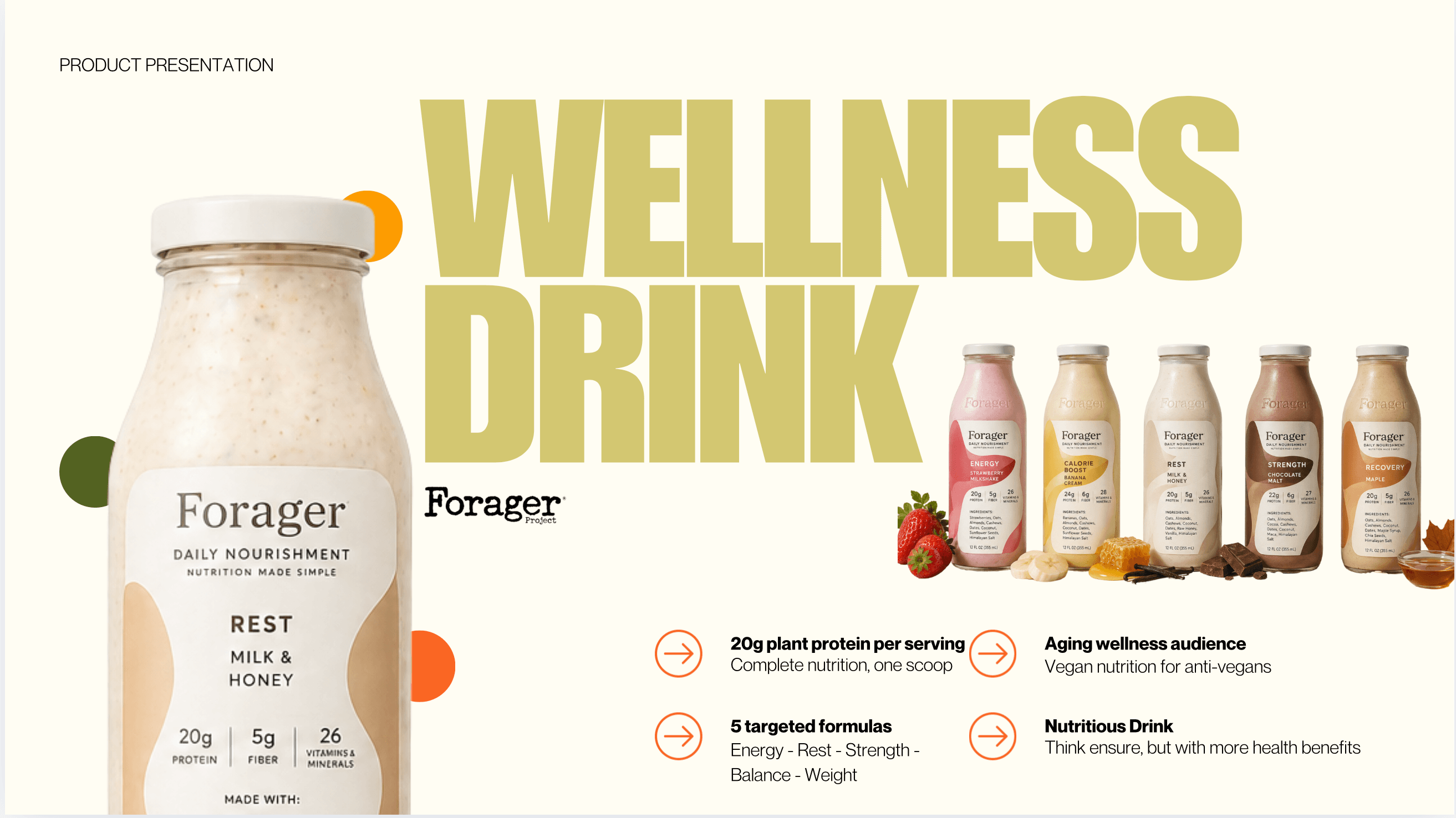
The Wellness Drink concept reimagines the nutrition shake through familiar bottles, nostalgic flavors, and simple daily wellness cues.
03 / WHAT I LEARNED
Framing is part of the design
One thing that really clicked for me this week is that the product itself is only part of the solution. The framing matters just as much. Calling something vegan, alternative, or innovative can be exciting to one audience, but alienating to another.
For our users, especially older and more routine-oriented users, trust was the core design problem. That meant our product language had to feel simple, natural, and familiar instead of trendy or overly complex.
This changed how I thought about product design. Sometimes the opportunity is not to invent something completely new, but to make something new feel like it already belongs.
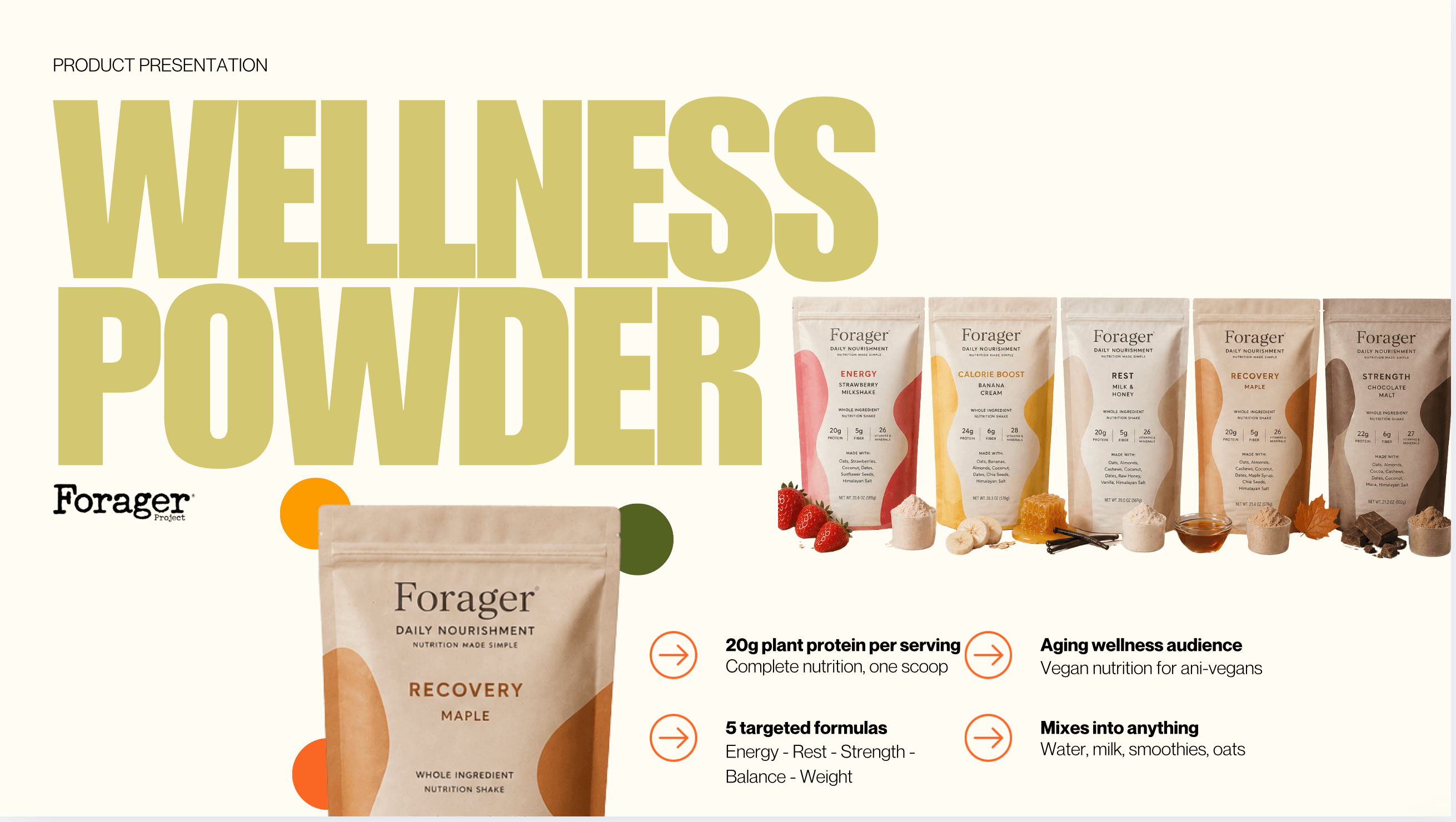
The Wellness Powder pushed the concept into a flexible format that could mix into water, milk, smoothies, or oats without forcing one specific routine.
04 / HOW OUR THINKING EVOLVED
Designing around what people already do
Across our interviews, we kept seeing the same priorities come up: nutrition, routine, simplicity, and products that support day-to-day life. That became the foundation of our design process.
Instead of asking people to change their behavior, we asked how Forager could fit into behaviors that already exist. That is why our product line included formats like drinks, powders, overnight oats, and small probiotic shots. Each one connects to a routine people already understand.
This was probably my biggest takeaway: if you design around existing behavior, the product has a much better chance of feeling natural.
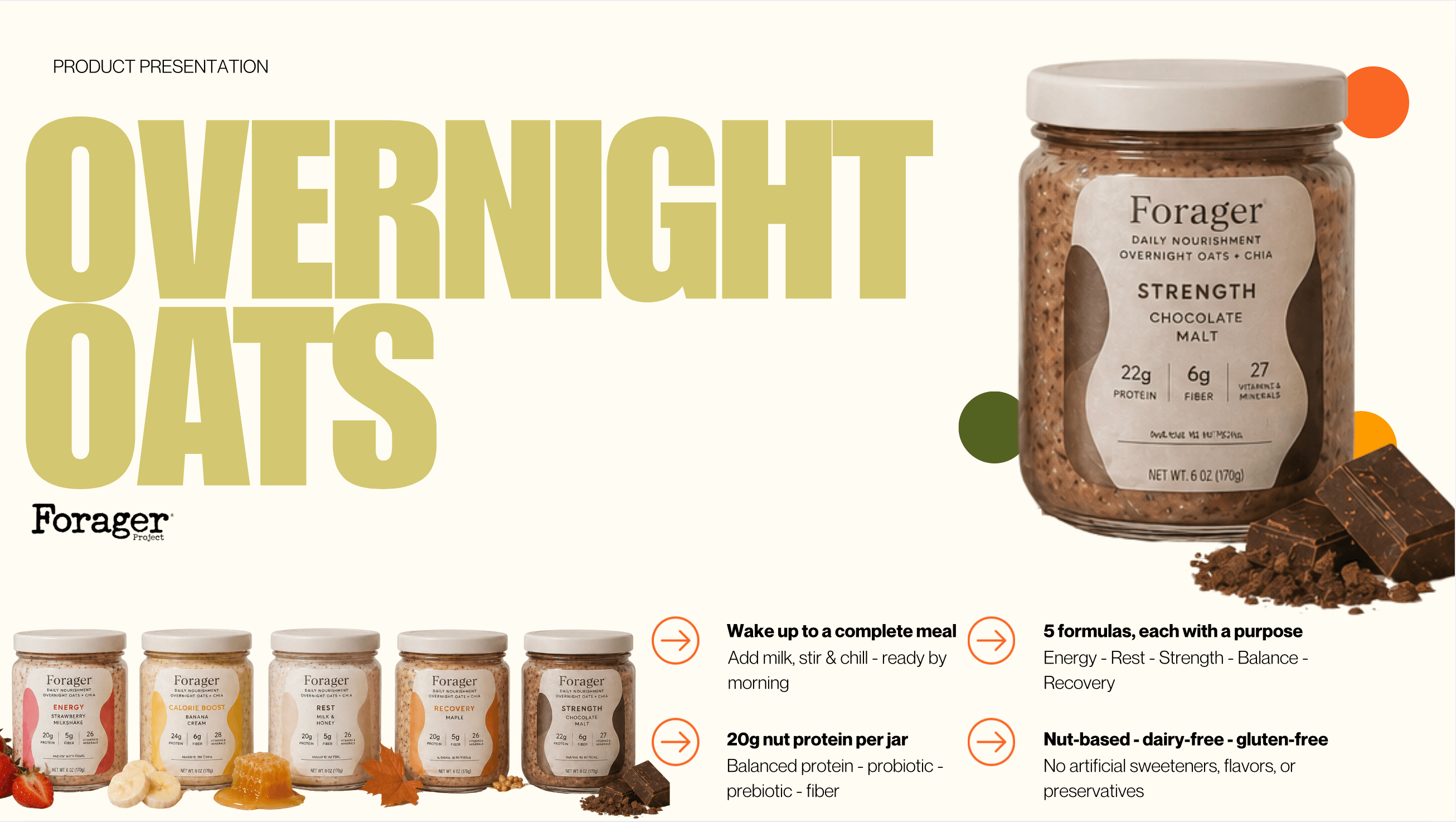
The Overnight Oats concept turned Daily Nourishment into a ready-by-morning meal built around convenience, protein, fiber, and familiar flavors.
05 / MY ROLE IN THE STORY
Connecting the insight to the product
My part of the presentation focused on connecting our participant insights to the product direction. I talked about how nutrition, routine, simplicity in flavors and ingredients, and lifestyle support kept showing up across our research.
I also helped frame the core insight: Forager already has a lot of what this audience is looking for — healthy, wholesome, simple, and delicious products — but it needed to be restructured and targeted in a way that made sense for older users.
That helped me see how important storytelling is in design. The product needs to be strong, but the reasoning behind it has to be clear too.
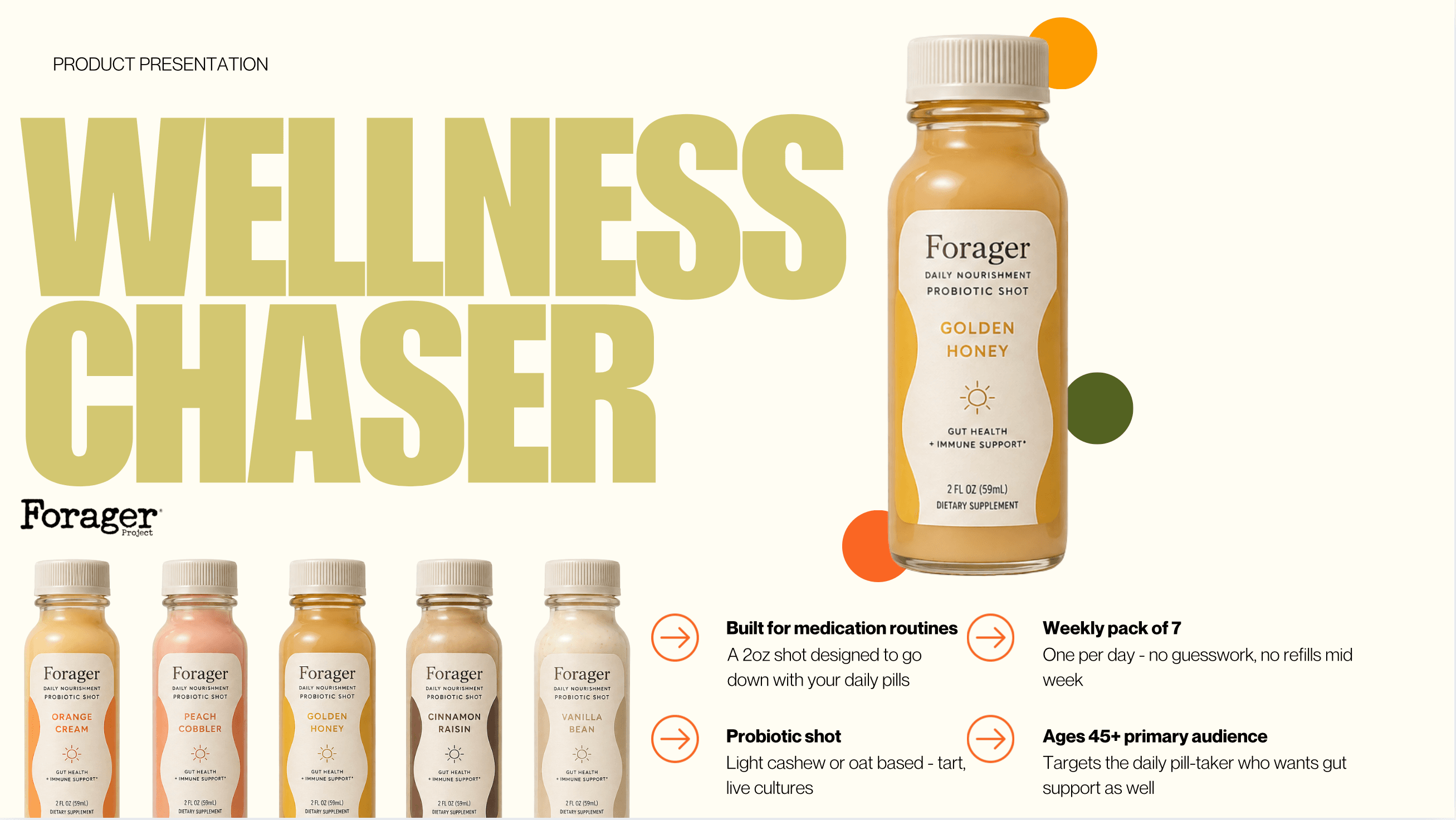
The Wellness Chaser concept turned a daily medication moment into a small gut-health ritual, using a weekly pack of seven to reduce decision fatigue.
06 / KEY THINGS I’M TAKING FORWARD
What I want to remember
First, I want to remember that a strong concept should always connect back to a real user tension. If the product does not clearly respond to that tension, then the idea probably needs more work.
Second, I want to keep thinking about language as a design material. The words on the packaging, the name of the product, and the way the concept is introduced all shape whether people trust it.
Third, I want to keep designing around routines. People are more likely to adopt something when it fits into what they already do, instead of forcing them to become a different version of themselves.
07 / MY TAKEAWAY
Teach one in a sentence
What I’m taking from Week 5 is that good design does not just make something new — it makes the new thing feel understandable, trustworthy, and easy to welcome into someone’s life.