DESIGN 121 / DP2 / WEEK 6
Week 6: Journalism + Gen Z
This week focused on co-creation, assumptions, and early prototyping. Instead of only defining the problem, we started building rough ideas and testing how people emotionally engage with journalism.
01 / MAIN TAKEAWAY
News avoidance is more emotional than I thought
One of the biggest things I realized this week is that disengagement from journalism is not always about people being uninformed or lazy. A lot of it is emotional.
Some users feel overwhelmed by politics. Some feel disconnected from the impact of stories. Others feel exhausted by constant arguments online. That completely changed how I thought about the problem.
Instead of asking “how do we make people read more news?” I started thinking more about how journalism could better fit into people’s routines, moods, conversations, and social environments.
02 / USER CONTRASTS
Two completely different relationships to news
Our interviews became more useful once we stopped treating “Gen Z” as one group. Nailah and Jacob had almost opposite relationships to journalism.
Nailah is highly engaged with politics and often explains stories to other people. Journalism already plays a role in her identity and conversations.
Jacob, on the other hand, does not really prioritize news in everyday life. He focuses more on school, career goals, and personal interests, and journalism often feels distant or irrelevant.
Seeing those differences helped me realize there is not one universal solution. Some people need tools for discussion and interpretation, while others first need a reason to care.
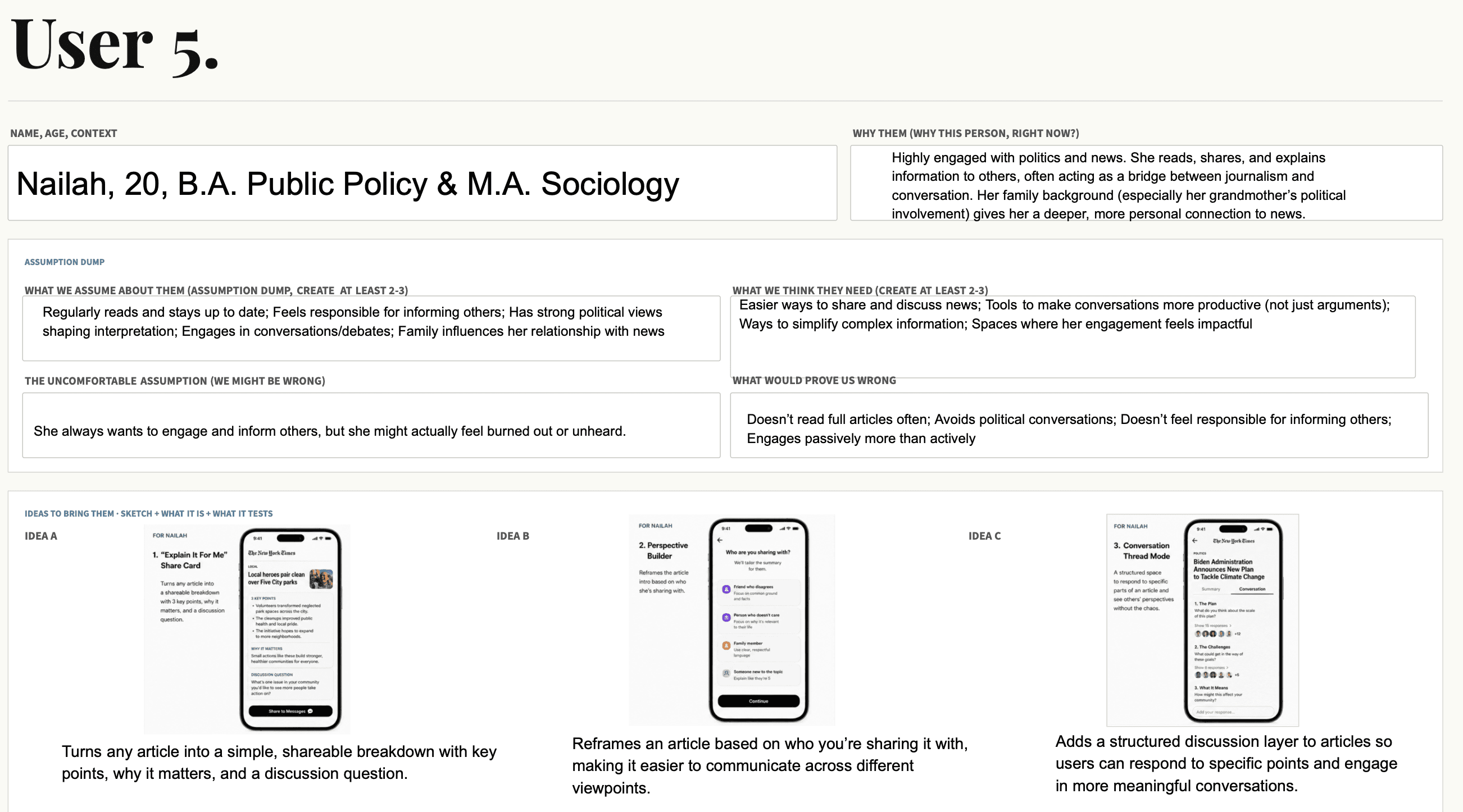
Nailah represents a highly engaged user who actively reads, shares, and discusses journalism.
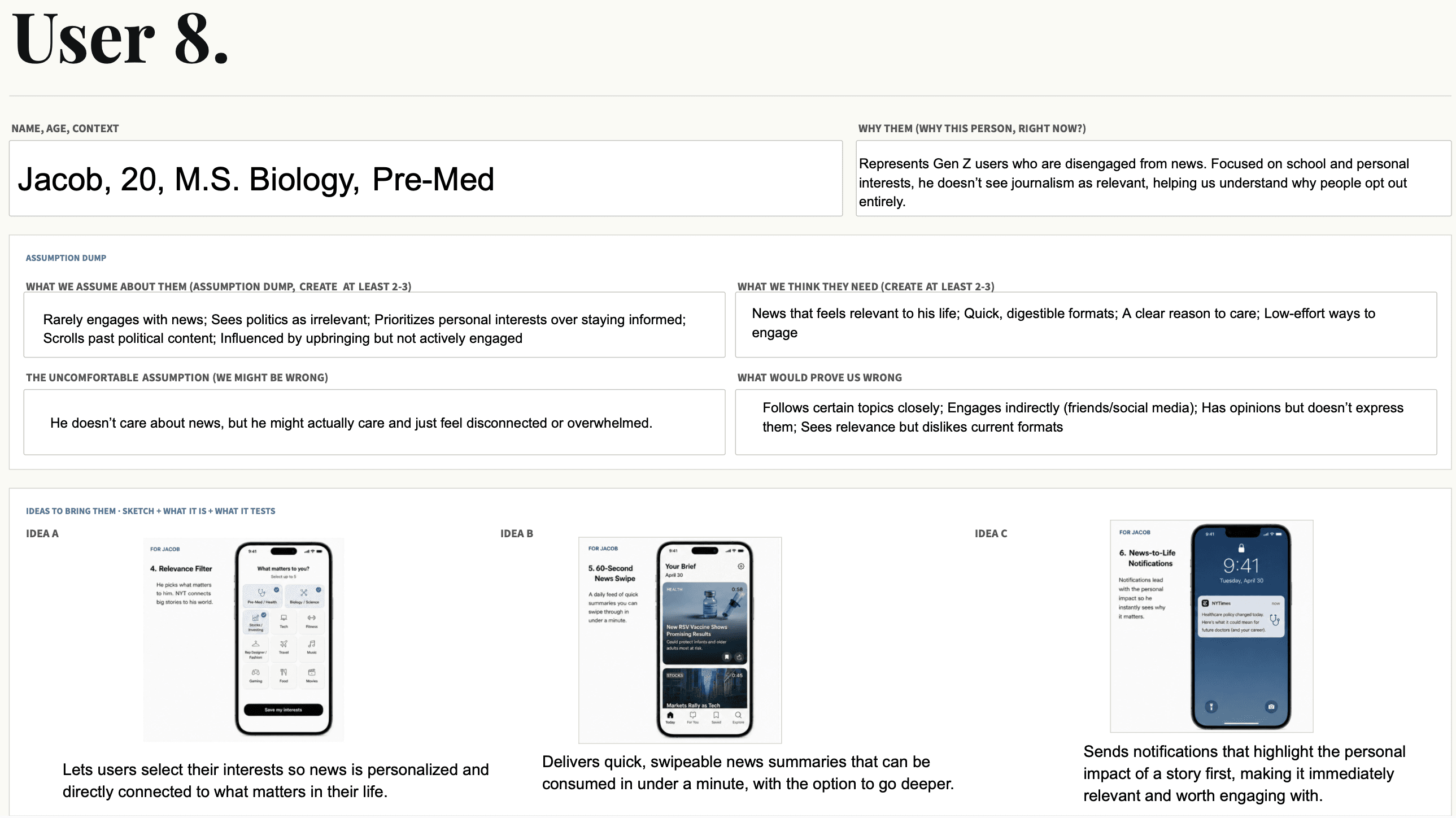
Jacob represents a more disengaged Gen Z user who does not naturally see journalism as part of everyday life.
03 / PROTOTYPING
The prototype is the question
Another big takeaway from this week was realizing that prototypes are not supposed to prove a final solution. They are supposed to test a specific assumption.
That shifted how I thought about design. Even rough sketches and paper interfaces became useful because they helped us quickly learn how users reacted emotionally to different concepts.
Most of our prototypes focused less on “features” and more on social behavior: what makes people share news, avoid it, trust it, or talk about it with others.
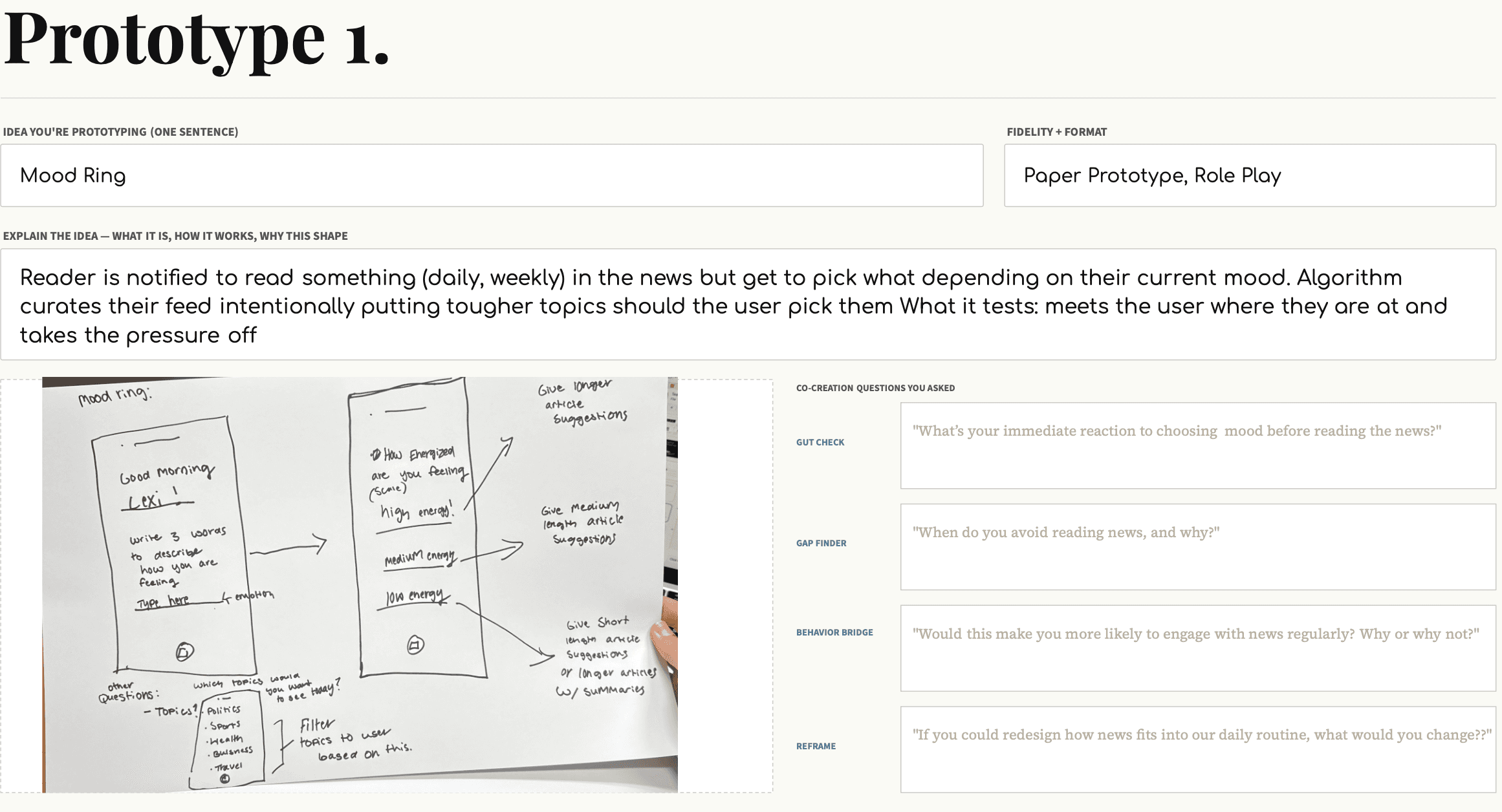
Mood Ring explored the idea of curating journalism around emotional energy and current mood.
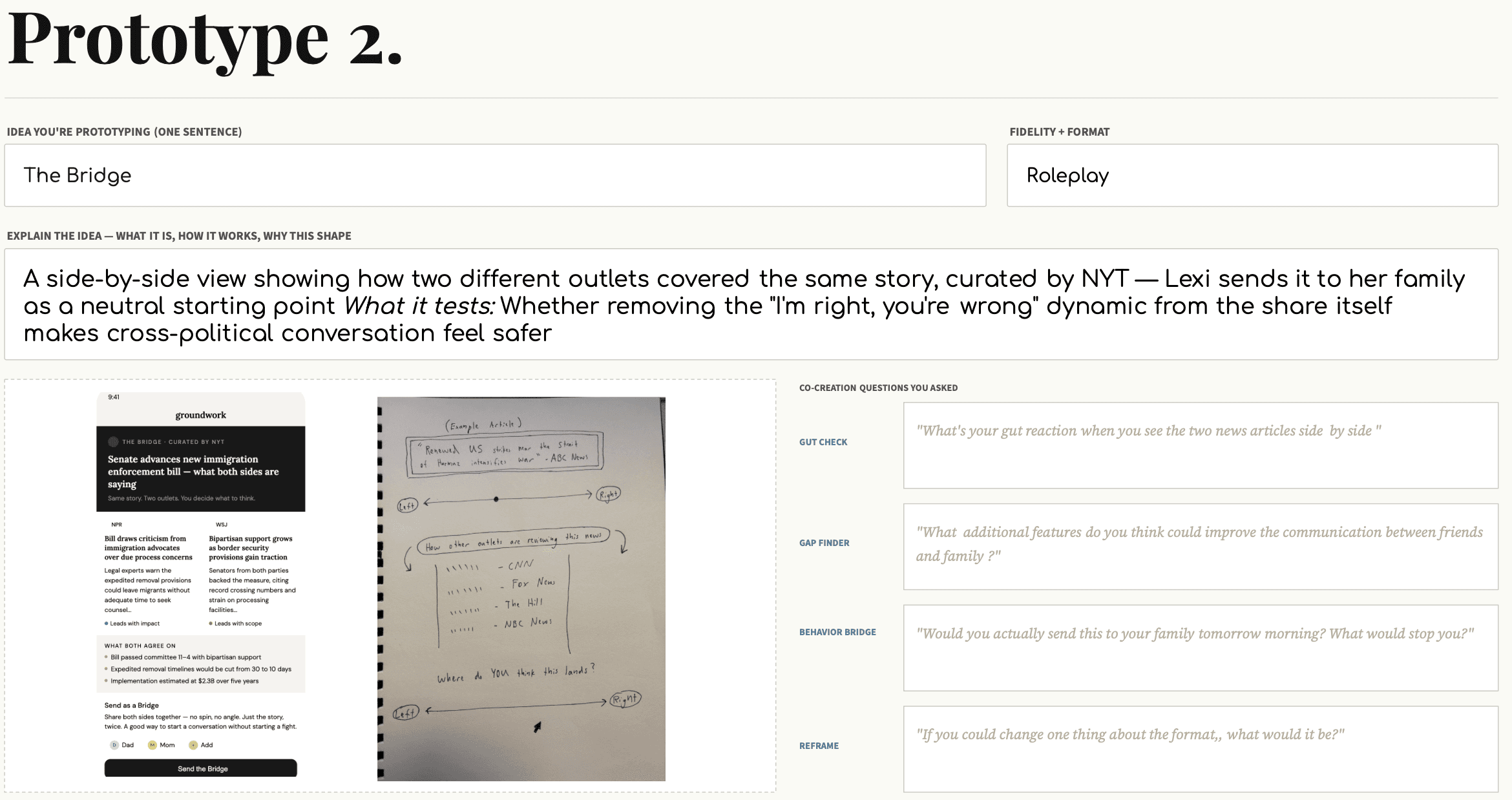
The Bridge tested whether side-by-side journalism perspectives could reduce the feeling of political conflict.
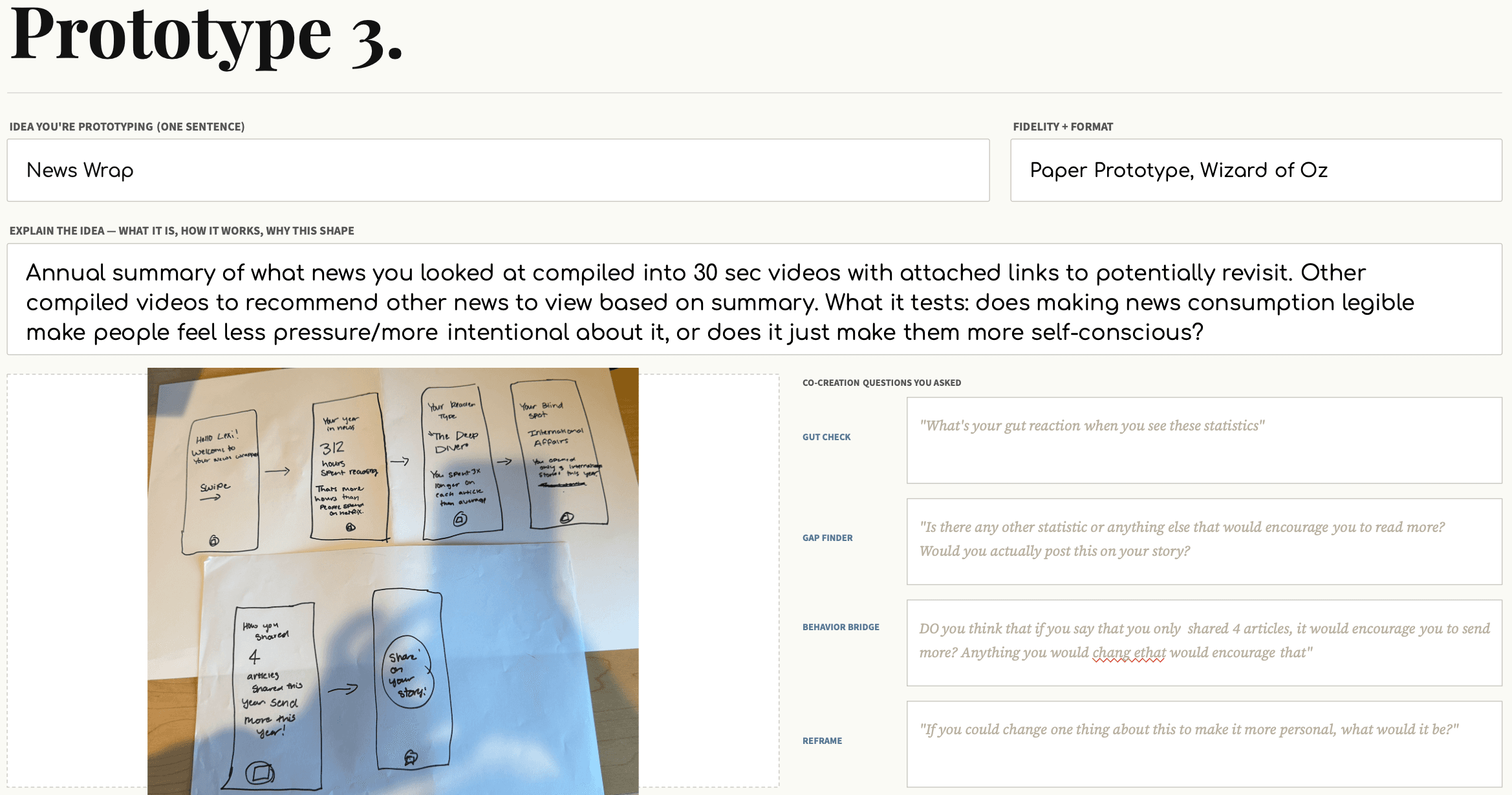
News Wrap explored whether summarizing someone’s yearly news engagement could make journalism feel more reflective and personal.
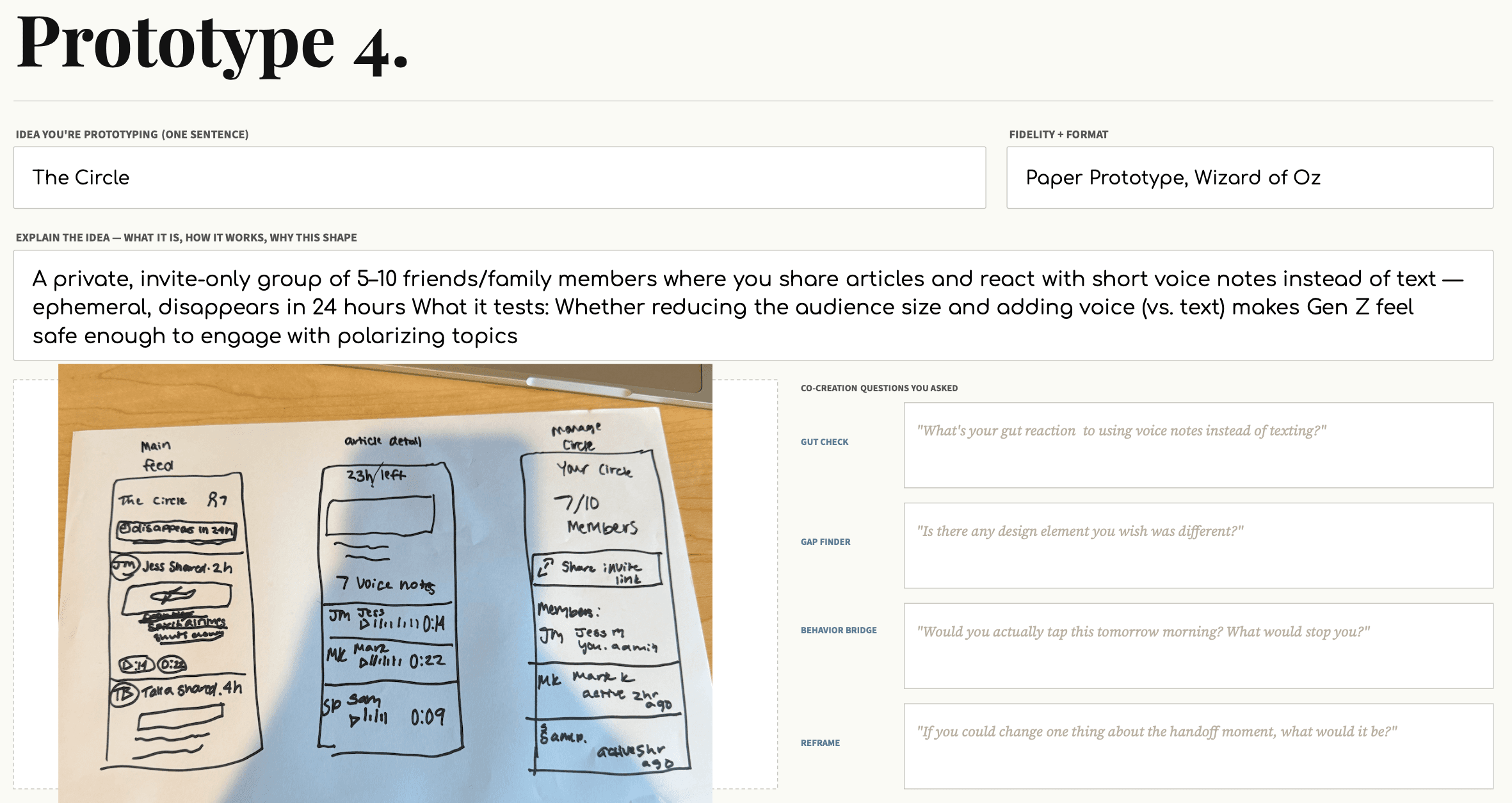
The Circle focused on smaller, voice-based conversations around journalism instead of public comment sections.
04 / WHAT CHANGED MY THINKING
Designing with users instead of for users
DP1 focused heavily on synthesis and identifying opportunity areas. DP2 feels different because the users are now directly shaping the design process itself.
Instead of building polished solutions first, we are intentionally making rough concepts that users can react to honestly. That feedback becomes part of the design process instead of something added at the very end.
This week made me realize how important it is to test emotional reactions early. Sometimes a user’s hesitation, confusion, or tone reveals more than whether they “liked” the idea.
05 / TEACH ONE
My biggest learning this week
The biggest thing I learned this week is that journalism design is not only about delivering information. It is also about designing around emotion, attention, trust, conversation, and everyday behavior.
If journalism wants to connect with Gen Z more deeply, it probably has to feel less like a lecture and more like something that naturally fits into people’s real lives and relationships.