DESIGN 121 / DP2 / WEEK 8
Week 8 — Final Refined Concept
Week 8 focused on refining our final direction into a more complete ecosystem. Instead of designing around avoidance, we shifted toward helping users engage with news in ways that feel manageable, contextual, and socially grounded. This phase centered on personalization, emotional pacing, optionality, and creating healthier pathways into difficult information.
FINAL REFINED CONCEPT
Moodly
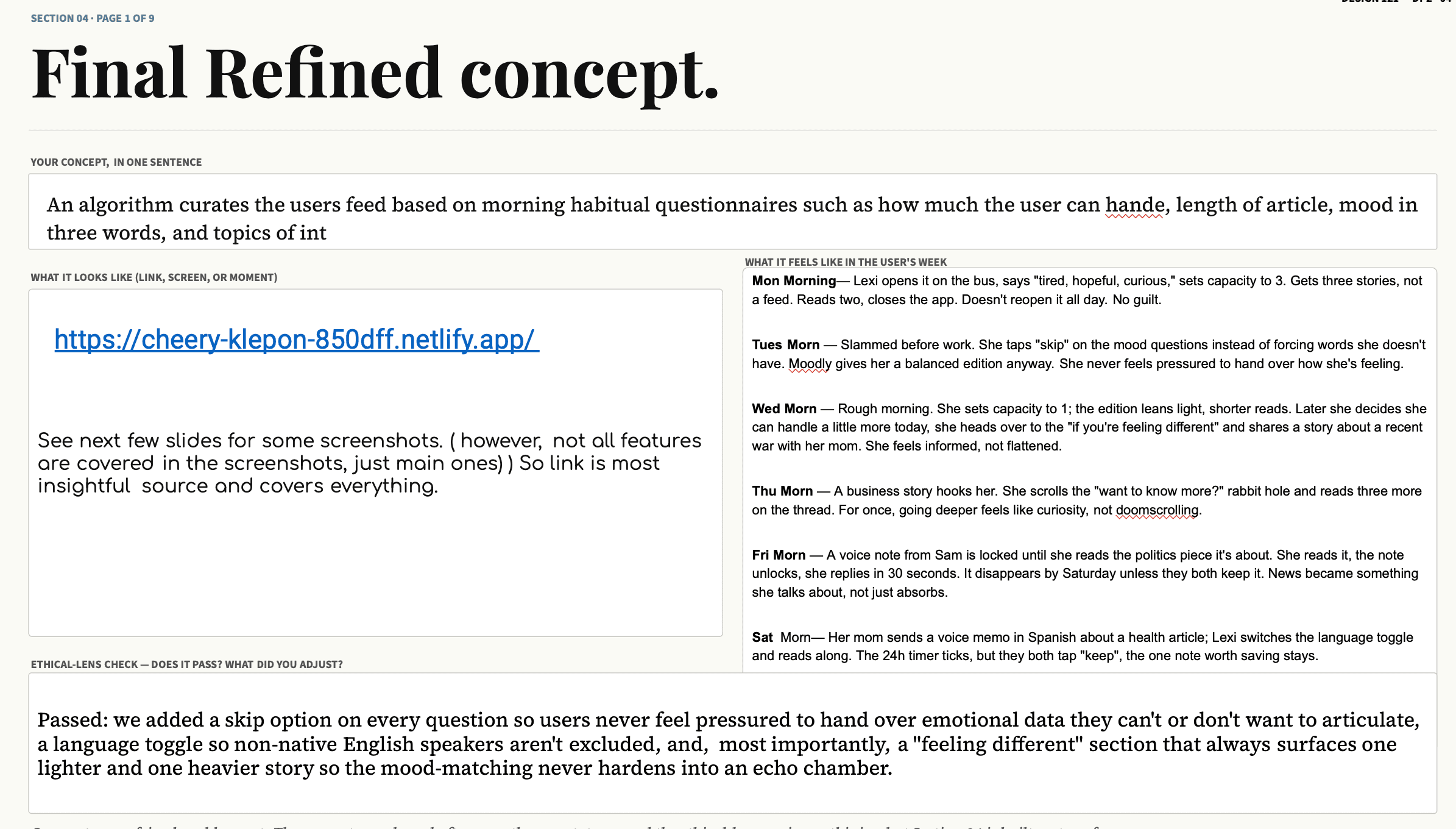
Our final concept evolved into a personalized news experience that adapts to emotional capacity, energy level, and user interests. Rather than overwhelming users with endless feeds, Moodly creates a lighter and more intentional relationship with current events.
The system uses lightweight morning prompts to understand how much content a user can realistically engage with that day. Instead of removing difficult topics entirely, the platform adjusts pacing, tone, article depth, and entry points into stories.
PERSONALIZATION SYSTEM
Curating Around Capacity
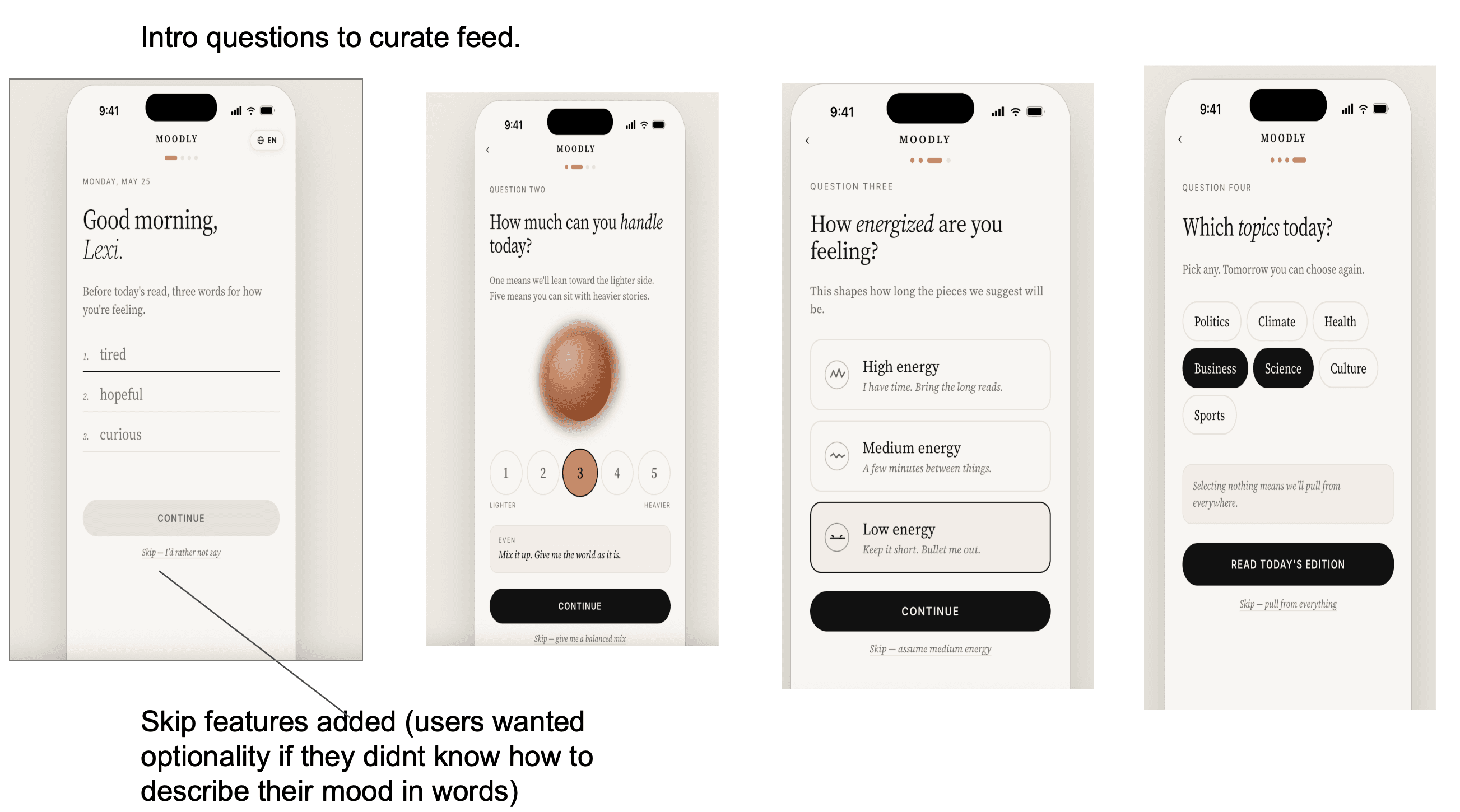
One of the biggest learnings from co-creation was that users wanted more control over how they entered difficult news. Instead of forcing users into rigid recommendation systems, Moodly introduces lightweight onboarding questions that help shape the day’s edition.
These prompts focus on emotional bandwidth, energy level, preferred topics, and reading depth. Importantly, users can skip questions entirely. This became a key ethical decision because participants expressed discomfort with systems that demanded emotional disclosure every time they opened the app.
The resulting experience feels more collaborative than algorithmic. Instead of the platform deciding everything for the user, the user actively shapes the pacing and framing of the information they receive.
INFORMATION FLOW
Encouraging Curiosity Instead of Doomscrolling
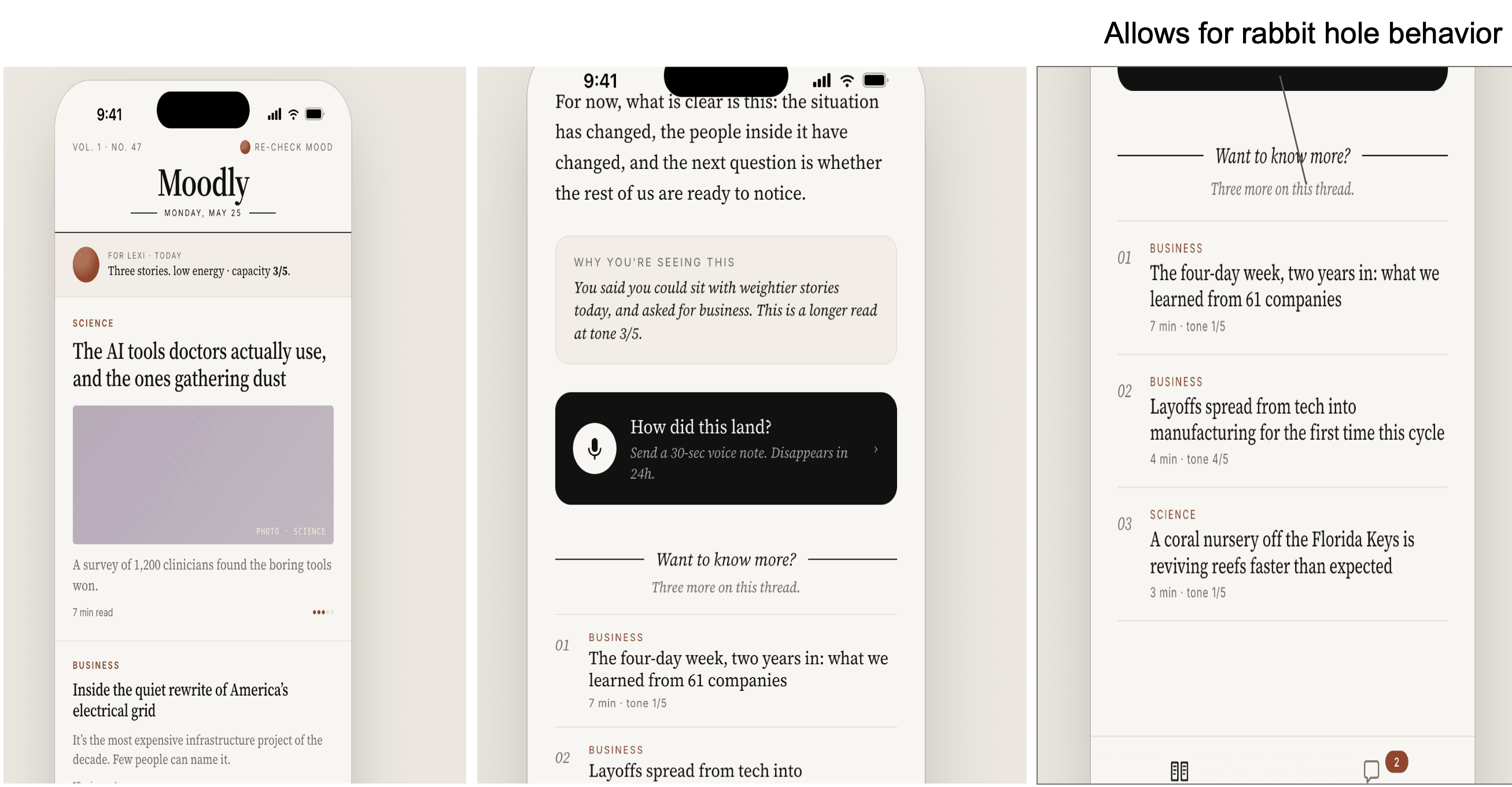
Another major insight was recognizing the difference between intentional curiosity and compulsive scrolling. Many users described wanting deeper context around stories, but not wanting to fall into overwhelming infinite feeds.
To respond to this, Moodly introduces controlled “rabbit holes.” Users can intentionally dive deeper into a topic through connected stories and contextual threads, while still maintaining boundaries around pacing and emotional intensity.
We also experimented with reflective prompts and voice-note responses that encourage users to process what they read rather than passively consume it. This shifted the product away from engagement-maximization and toward healthier interaction patterns.
SOCIAL INTERACTION
Designing More Intentional Conversation
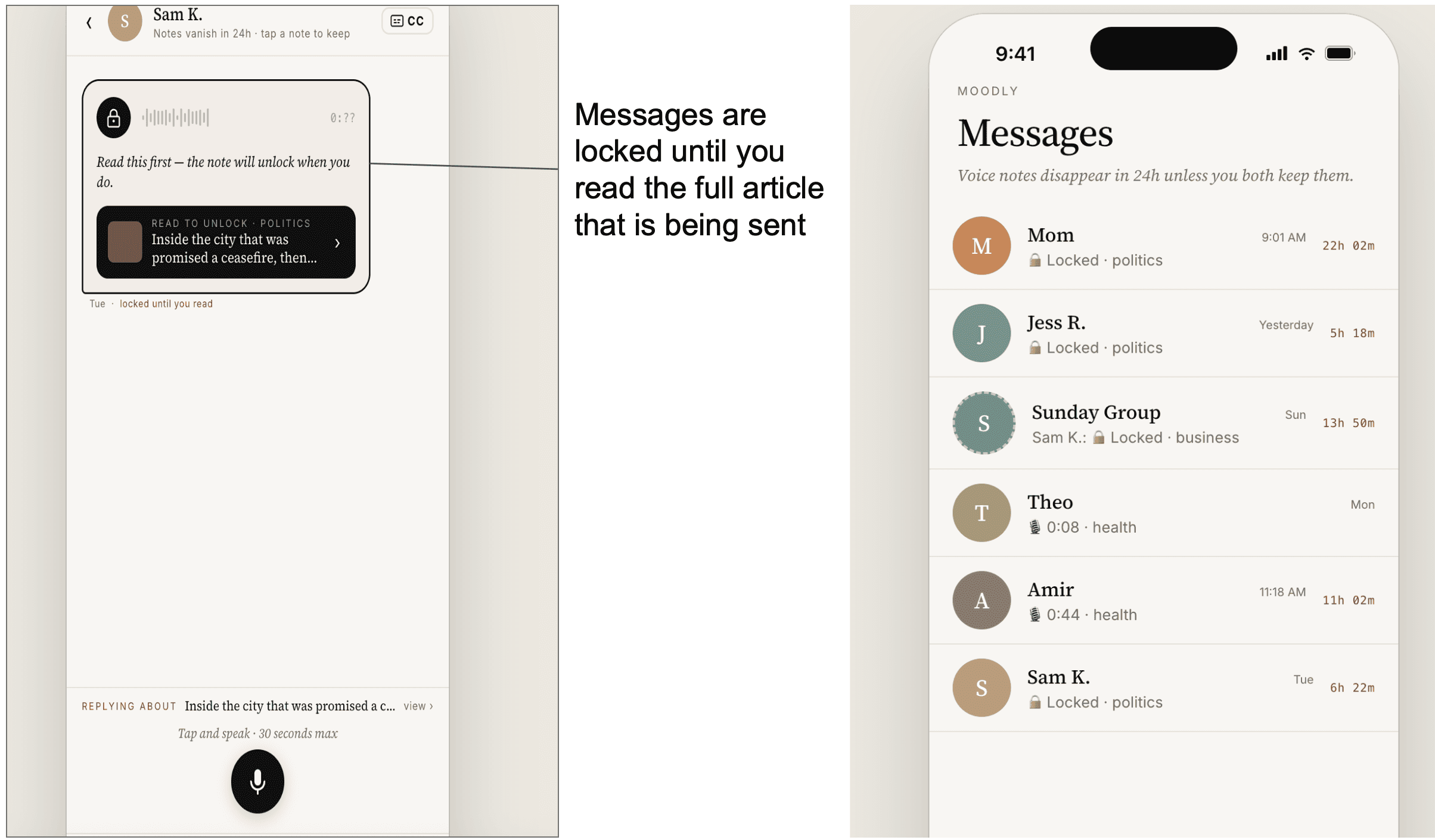
One of our more experimental ideas involved “locked” messages. Voice notes and conversations only unlock once a user reads the article connected to the discussion. This was designed to reduce reactive discourse and encourage more informed participation.
The messaging system also introduced disappearing voice notes. Conversations expire after 24 hours unless both users choose to keep them. Participants responded positively to the temporary nature of these discussions because it reduced pressure and made political conversation feel less permanent and performative.
Through testing, we learned that users were more willing to engage with difficult topics when discussion felt intimate, low-stakes, and grounded in smaller circles rather than public comment sections.
FINAL PROTOTYPE
Interactive Prototype
Alongside the slides and concept development, we also built a functional prototype demonstrating the onboarding flow, personalized feed behavior, emotional pacing system, and conversational features explored throughout this project.
Open Prototype →